An Ancient Fraternity in a Modern World

Our Heritage

Freemasonry is one of the world's oldest and largest non-religious, non-political, fraternal and charitable organizations. It teaches self-knowledge through participation in a progression of ceremonies, ritual and fellowship.

Since receiving its Charter in 1955 from the Grand Lodge Alpina of Switzerland, Masonry Universal Lodge No. 40 has evolved into a vibrant multicultural community. While our origins are rooted in the international organizations of Geneva, our membership today encompasses a broad spectrum of professions and backgrounds. 

We remain the only Lodge in the city of Geneva to work in English, providing a fraternal home for those who value the English Emulation ritual and bridging the gap between visiting brethren from around the world and the local Masonic heritage of Switzerland.

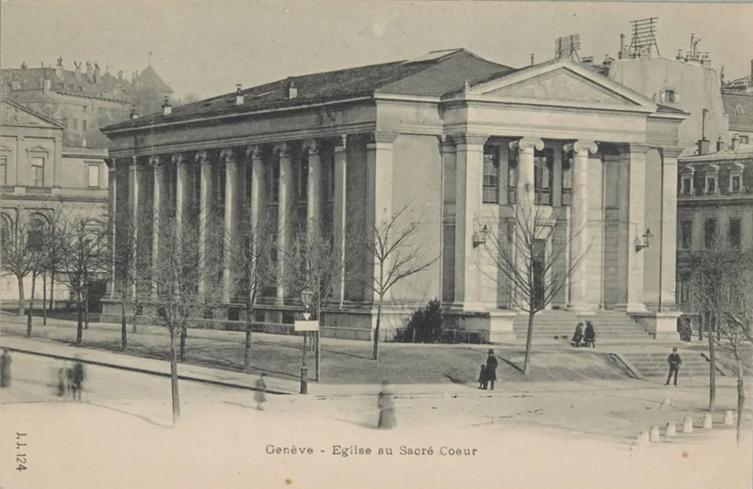
Eglise du Sacré-Cœur

Commissioned in 1858 as the Temple Unique, the intended central seat for Geneva’s Freemasons. Designed by Brother Hermann Hug, this architectural landmark was surrendered and consecrated as a Catholic church in 1873 following the political upheaval of the KulturkampfPhoto: Jullien Frères (1900-1930).

Origins & Evolution

Freemasonry traces its roots to the medieval stonemasons who built Europe's cathedrals and castles. Early organizational forms included "lodges," incorporation, and Craft Guilds.

  • Operative Freemasonry: Based on physical craft labor and medieval stonework.
  • Speculative Freemasonry: The modern, philosophical form focused on moral and spiritual growth.

Today, membership is estimated at around six million worldwide. The largest single jurisdiction is the United Grand Lodge of England (approx. 250,000 members).

A Global Fraternity

Freemasonry is organized into independent Grand Lodges, each governing its own jurisdiction and constituent Lodges.

Integrity

Masons believe in unfailing honesty and high moral standards. We strive to achieve integrity in our private and public lives, staying true to our word and our values.

Kindness

We treat every human being as a member of a global family. We promote tolerance and respect for the opinions of others, acting with compassion and genuine friendship.

Charity

From its earliest days, Freemasonry has been concerned with the care of those in need. We practice active benevolence, supporting both our members and the wider community through selfless giving.

Historical Milestones

1717

Formation of the United Grand Lodge of England in London, marking the birth of modern, organized Freemasonry.

1736

George Hamilton, an Englishman, introduces Freemasonry to Geneva under the name Société des Maçons Libres du Parfait Contentement.

1768

Founding of Union des Cœurs; the oldest active Swiss lodge and the sponsoring lodge of Masonry Universal Lodge No. 40.

1844

Founding of the Grand Lodge Alpina of Switzerland.

1937

The Fonjallaz Initiative: Swiss voters (including 60% in Geneva) decisively reject a national attempt to ban Freemasonry.

1955

Consecration of Masonry Universal Lodge No. 40 in Geneva.

2005

Consecration of Hiram Lodge No. 80 (Geneva), the French-speaking “daughter lodge” founded by members of Masonry Universal Lodge No. 40.

2013

Consecration of St. George’s Lodge No. 85 (Vaud), the “sister lodge” working in the English tradition.

2025

70th anniversary of Masonry Universal Lodge No. 40.

Swiss Masonic Heritage

Notable Swiss Freemasons

Jonas Furrer
Jonas Furrer (1805–1861)

A member of Akazia Lodge, he served as Grand Orator of the Grand Lodge Alpina before becoming the first President of the Swiss Confederation in 1848.

Augusto Giacometti
Augusto Giacometti (1877–1947)

A world-renowned Swiss painter initiated in 1919. He was a pioneer of abstract art and famous for his holy art decorations.

Adrien Lachenal
Adrien Lachenal (1849–1918)

A Geneva politician and solicitor, Lachenal served as President of the Swiss Confederation in 1896.

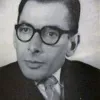
André Chédel
André Chédel (1915–1984)

A renowned philosopher and humanist from Le Locle, awarded a Doctorate honoris causa by the University of Neuchâtel.

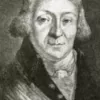
Pierre-Maurice Glayre
Pierre-Maurice Glayre (1743–1819)

A diplomat and private secretary to the King of Poland, later serving as a prominent politician in the Vaud region.

Remembrance: The Forget-Me-Not


During the Nazi regime, Freemasons were persecuted as political prisoners. To identify one another discretely, Masons adopted the small blue Forget-Me-Not flower as a badge of membership.

After 1948, the flower was formally adopted as a Masonic emblem to remember those who suffered. Today, Masons worldwide wear this badge on their lapels to honor those who stood for the Craft.

For a Lodge like ours, situated in the city of peace, Geneva, and founded in the decade following the war, the Forget-Me-Not is a poignant reminder of our commitment to Universal Brotherhood and the enduring freedom of the Craft in Switzerland.

Women in Freemasonry

Masonry Universal Lodge No. 40 is a lodge working under the Grand Lodge Alpina of Switzerland, which, like all regular Grand Lodges worldwide, is an exclusively male obedience.

Women who wish to practice Freemasonry have the opportunity to join established women’s obediences. In Switzerland, the Women's Grand Lodge of Switzerland brings together lodges working in French, German, and Italian, and contributes actively to the moral, intellectual, and spiritual development of its members.

Relations between the Grand Lodge Alpina of Switzerland and the women’s Grand Lodge are respectful and constructive. Dialogue exists between their governing bodies, and contacts between lodges are encouraged in a non-ritual context, particularly in social, cultural, and humanitarian fields.

Interested in learning more about our values?

How to Become a Mason